Summary
- Syllabus overview
Chapter 19

- Electric charges

- origin & types
- + glass rubbed with silk
- − amber rubbed with fur
- conductors
- insulators
- the electroscope
- electrical ground
Example #1
- electrons & protons, Coulombs
- conservation of charge
Example #2
Example #3
- Lecture learning outcomes
A student who masters the topics in this lecture will be able to:
- explain the characteristics of electric charges in terms of sign and magnitude
- describe the principle of charge conservation
- correctly use the Coulomb unit (C) and the fundamental charge quantity e
Course learning outcomes
Upon successfully completing Physics 204, a student will be able to:
- explain the fundamental concepts of electricity, magnetism, optics, and modern physics
- use graphs and algebra to explain measurements and make predictions
- describe the usefulness and limitations of problem-solving methods for realistic examples
GEP natural science learning outcomes
Upon successfully completing Physics 204, a student will be able to:
- explain major concepts, methods, or theories used in the natural sciences to investigate the physical world
- interpret information, solve problems, and make decisions by applying natural science concepts, methods, and quantitative techniques
- describe the relevance of aspects of the natural sciences to their lives and society
Practice:
Try these additional examples
Example #4
Example #5
Prepare:
Read textbook sections 19-4 and 19-5 before the next lecture
Additional information
About the professor
 How to learn physics
- learning athletics
- learning music
- role of the instructor
- curiosity
_2021_small.png)
How to fail at college
 How to succeed in college
- Set a GPA goal
- Treat college like an 8 to 5 job
- Attend class
- Keep up
- Relate to your professors
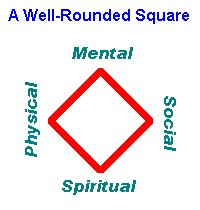
- Be a "well-rounded square"
kw4
Could you use fur, silk, or wool to negatively charge a metal rod that is held in your hand?
A. fur
B. silk
C. wool
D. None of these
Answer
kw4
When a neutral water molecule disassociates into an H+ ion and an OH− ion, what can we say about the amounts of charge on the two ions?
A. They have the same amount of charge.
B. The OH− has more negative charge
C. The H+ has more positive charge
D. Need to measure the charges.
Answer
klm
If a glass rod is rubbed with silk, is the charge on the silk positive or negative?
A. positive
B. negative
C. The silk is neutral.
Answer
klm
A negatively charged plastic rod attracts bits of paper. We can conclude the paper bits are
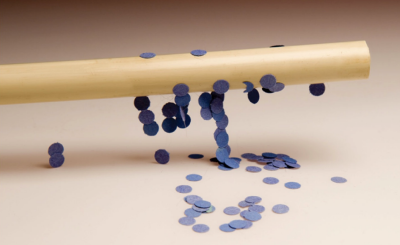
A. positively charged
B. negatively charged
C. electrically neutral
D. either A or C
E. It is impossible to draw any conclusions about the paper.
Answer
Knight2 26.stt.1
To determine if an object has positive charge, you need to
A. see if the object attracts a negatively charged object.
B. see if the object repels a positively charged object.
C. Do both A and B.
D. Do either A or B.
Answer
D. None of these
The metal would conduct any excess charges to your body, which would act as an effective ground so that no excess charge would
remain on the metal rod.
A. They have the same amount of charge.
This must be true because the sum of the two charges must be zero in order for the molecule to have been electrically neutral before
it disassociated.
B. negative
By definition glass rubbed with silk is positively charged. That means electrons were removed from the glass and are now sticking onto the silk, giving the silk a net negative charge.
D. either A or C
The bits of paper can be attracted to the negatively charged rod if they are either
positively charged or neutral (in which case the attraction is caused by charge polarization). We can only rule out
answer B because if the paper bits were negatively charged they would be repelled by the negatively charged rod.
B. see if the object repels a positively charged object.
Attraction to a negative charge is not helpful for determining whether an
object is positively charged because neutral objects (like bits of paper) are also attracted to a positively charged object. But repulsion by a known positive charge is definitive proof the object is positively charged.